
Hail Hit Sugar Land: What Homeowners Should Check Before Filing a Roof Claim
Hail was reported across parts of Sugar Land, Missouri City, Pearland, and nearby areas during the recent round of severe weather. For homeowners in Fort Bend and the Greater Houston area, that creates an important question:
Should I file an insurance claim, or should I have the roof inspected first?
That question matters.
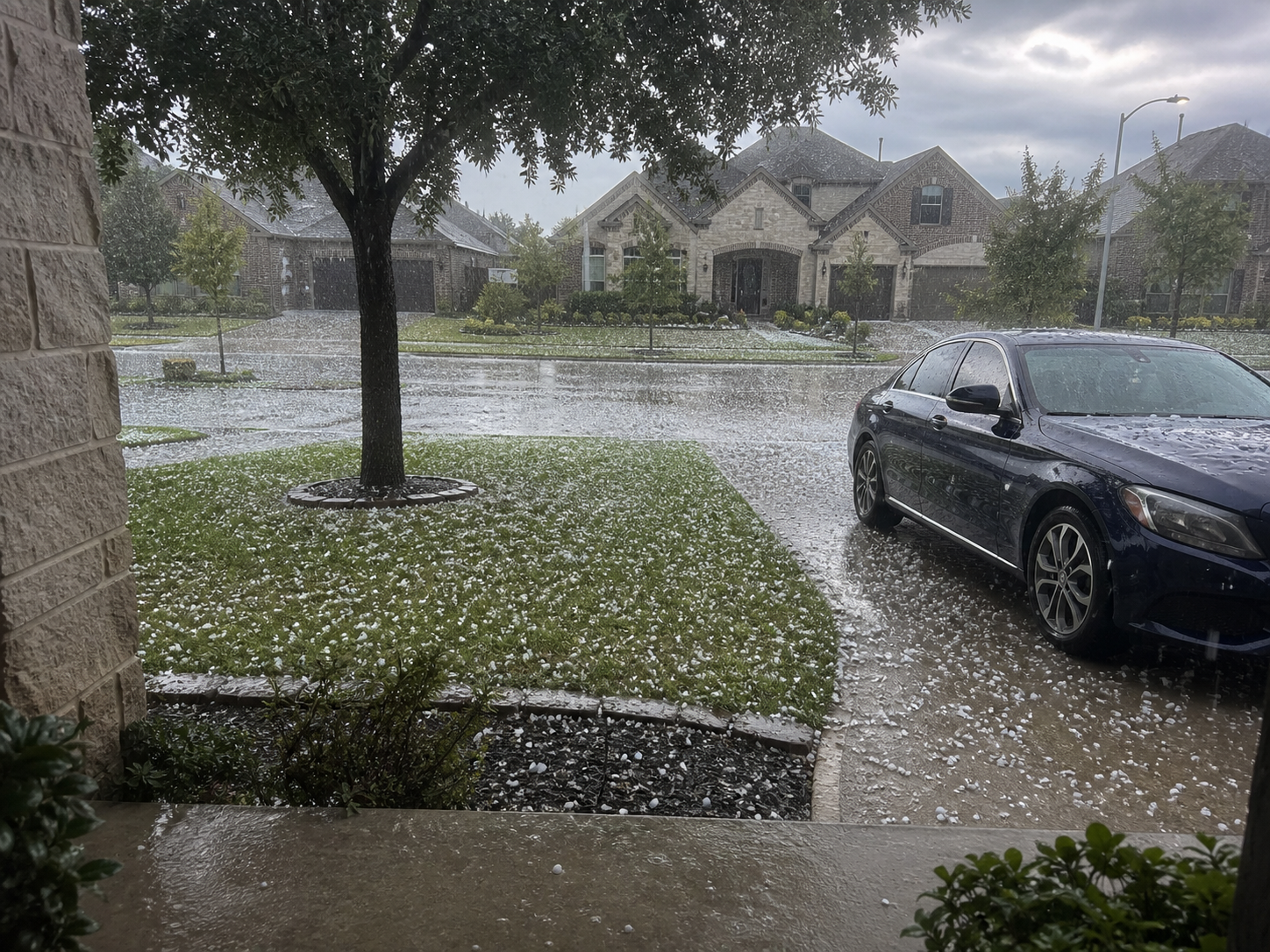
After a hail storm, it is normal to worry about the roof, especially if you heard hail hitting the house, saw damage to vehicles, noticed loose granules near downspouts, or had neighbors talking about possible roof damage. But opening a roof claim before you know what is actually happening on the roof can create confusion.
The better first step is a professional hail damage roof inspection with clear storm damage documentation.
That does not mean every roof needs to be replaced. It does not mean every home has claim-worthy damage. It simply means the roof should be inspected carefully, documented properly, and evaluated based on evidence instead of guesswork.
For homeowners in Sugar Land, Missouri City, Pearland, Richmond, Rosenberg, Stafford, Greatwood, First Colony, Riverstone, Sienna, Katy, and nearby Houston-area communities, here is what to check after a hail storm before filing a roof claim.
Why Hail Damage Is Not Always Obvious From the Ground
One of the biggest mistakes homeowners make after a hail storm is assuming that roof damage will be easy to see.
Sometimes it is. If shingles are missing, vents are dented, gutters are heavily damaged, or leaks appear inside the home, the problem is hard to ignore.
But hail damage on asphalt shingles is often more subtle.
A roof can have hail impacts without large holes, missing shingles, or obvious destruction. Hail can bruise the shingle mat, knock protective granules loose, damage soft metal roof components, or weaken areas that may not leak immediately.
That is why hail damage is different from many other roofing problems. A roof may look mostly normal from the driveway while still needing a closer inspection.
Houston-area roofs also deal with heat, humidity, UV exposure, heavy rain, and wind-driven storms. Those conditions can age shingles over time. After a hail event, it takes a trained inspection to separate new storm damage from normal wear, older granule loss, installation issues, or pre-existing roof conditions.
What Homeowners Can Safely Check First
Before anyone climbs on the roof, start with a safe ground-level inspection.
Do not get on the roof after a storm. Wet shingles, steep slopes, loose granules, and damaged materials can make the roof dangerous. Most homeowners can gather useful information from the ground without risking a fall.
Start by checking these areas:
• Vehicles parked outside
• Gutters and downspouts
• Window screens
• Fence caps and stained wood surfaces
• Patio furniture
• Outdoor AC units
• Mailboxes
• Garage doors
• Metal vents or roof accessories visible from the ground
• Shingle granules collecting near downspouts
• New ceiling stains or moisture inside the home
If your vehicle has fresh dents, your window screens are torn, or your gutters show new dings, that does not automatically prove the roof is damaged. But it does confirm that hail hit the property hard enough to affect exposed surfaces.
That is a good reason to schedule a roof inspection.
Car Hail Damage Does Not Automatically Mean Roof Damage
This is one of the most important points after a hail storm.
Vehicle damage is a warning sign, not a roof diagnosis.
Cars, gutters, fences, and roof shingles are made from different materials. They sit at different angles. They respond differently to impact. A car hood may dent from hail while a newer architectural shingle performs better. On another home, an older heat-aged roof may take meaningful damage from the same storm.
That is why a roof should be evaluated directly.
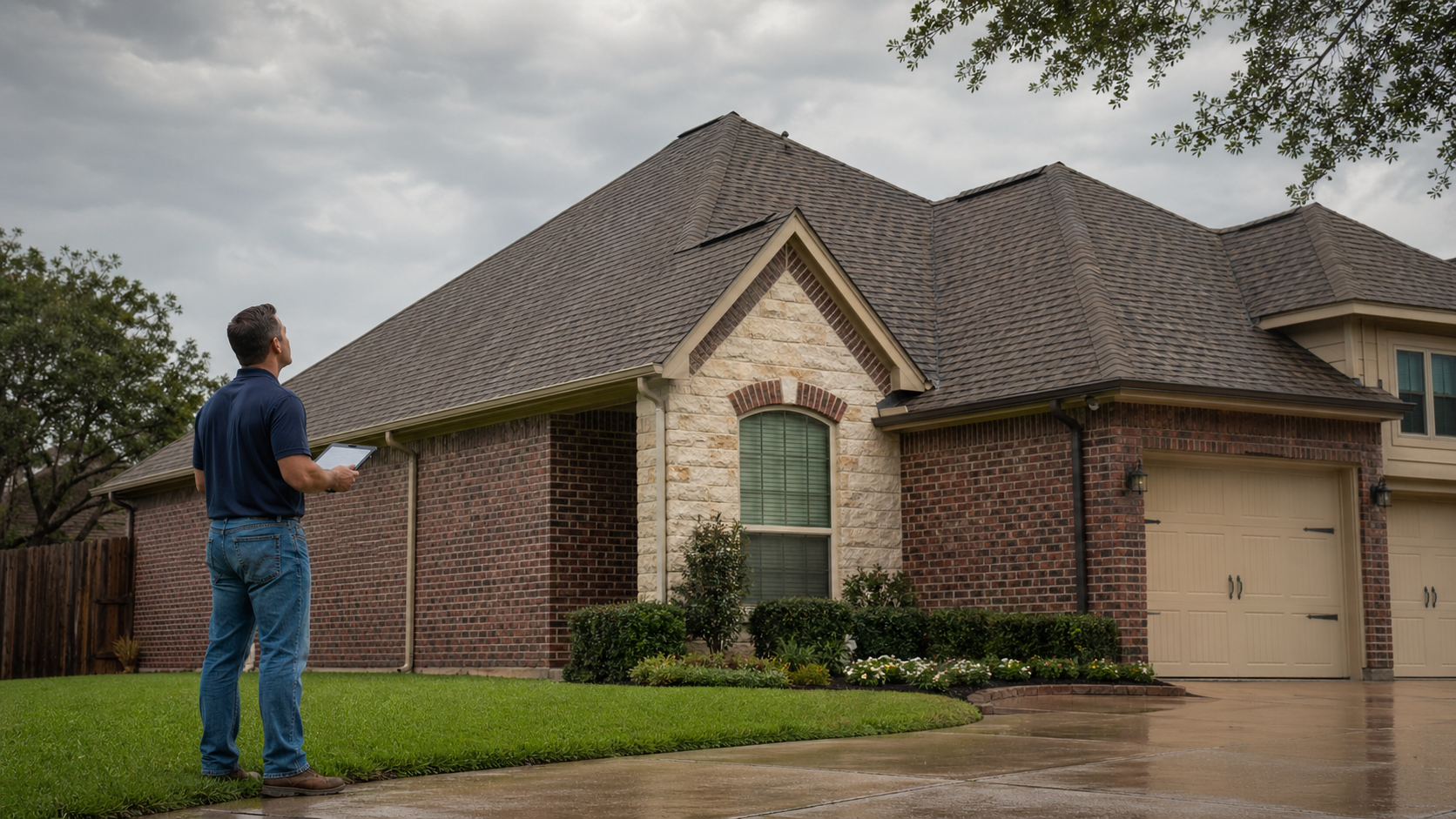
A proper storm damage roof inspection looks at each roof slope, not just the fact that hail occurred in the neighborhood. The inspector should check the shingles, roof penetrations, flashing areas, ridge components, gutters, vents, and other exposed materials.
The goal is to answer a simple question:
Is there actual roof damage that should be repaired, documented, or discussed with the insurance company?

Signs That Make a Roof Inspection More Important
After the recent hail activity in Sugar Land and nearby areas, homeowners should pay closer attention if they notice any of the following:
• Fresh dents on vehicles, gutters, downspouts, or roof vents
• Shingle granules collecting around downspout exits
• New dark marks or impact patterns on shingles
• Missing, lifted, or creased shingles
• New ceiling stains after the storm
• Water dripping around light fixtures, vents, or ceiling corners
• Damaged window screens or exterior trim
• Neighbors on the same street reporting hail damage
Some of these signs are indirect. For example, granules near a downspout can come from normal shingle aging, heavy rain, foot traffic, or hail impact. That is why the inspection matters.
The question is not just whether there are granules.
The question is why they are there, whether the shingle mat has been damaged, and whether the roof system still has its protective surface intact.
What a Real Storm Damage Roof Inspection Should Include
A good hail inspection should be more than a quick glance from the ground.
A proper storm damage documentation inspection should include photos, roof-slope evaluation, and clear notes about what was found. If damage is present, the documentation should help the homeowner understand the condition of the roof before deciding what to do next.
A thorough inspection should look at:
• Asphalt shingle impact marks
• Bruising or soft spots in the shingle mat
• Granule displacement
• Exposed fiberglass mat
• Cracked, creased, lifted, or missing shingles
• Ridge cap condition
• Pipe boots and roof penetrations
• Roof vents and other soft metals
• Flashing areas
• Valleys
• Gutters and downspouts
• Signs of interior leaks or attic moisture when applicable
The inspection should also separate roof damage from cosmetic damage.
For example, a dented vent may show hail impact, but that does not automatically mean every shingle on the roof is damaged. Likewise, one damaged slope does not always mean the entire roof needs replacement. The inspection should be specific enough to determine whether the issue is isolated, widespread, repairable, or potentially claim-related.
Before Filing an Insurance Claim, Get Evidence
A roof insurance claim should be based on documented damage, not fear.
After a storm, many homeowners feel pressure to file a claim quickly. In some situations, a claim may be appropriate. But before opening a claim, it is smart to have the roof inspected and documented so you know what you are dealing with.
A storm damage inspection can help answer:
• Was there visible hail damage to the roof?
• Which slopes were affected?
• Are there damaged vents, gutters, flashing, or penetrations?
• Is there evidence of leaking?
• Does the roof look repairable?
• Is the damage significant enough to discuss with the insurance carrier?
• Are the issues storm-related, age-related, or a mix of both?
Community Roofing Texas does not make insurance coverage decisions and does not act as a public adjuster. Your insurance carrier determines coverage based on the policy and their claim process.
But good roof documentation matters.
Clear photos, roof-slope notes, and an honest inspection can help a homeowner make a more informed decision before starting the claim process.
Why Houston-Area Roofs Need Careful Evaluation After Hail
Roofs in the Sugar Land and Greater Houston area face a tough combination of conditions.
Hail is only one part of the picture. Houston roofs also deal with intense sun, heat, humidity, wind-driven rain, sudden downpours, tropical systems, and long storm seasons. Over time, that exposure can make shingles more vulnerable.
Older shingles may lose flexibility. Granules may loosen. Pipe boots can crack. Flashing details can become weak points. Valleys and roof penetrations may already be stressed before a hail storm arrives.
That is why two homes in the same neighborhood can have very different outcomes after the same storm.
One roof may come through with only minor cosmetic marks. Another roof may have enough impact damage, granule loss, or weakened areas to justify repairs or further insurance review.
The only way to know is to inspect the roof itself.
Do Not Let Door-Knocker Pressure Drive the Decision
After hail storms, it is common for roofers and storm-chasing contractors to show up quickly in affected neighborhoods.
Some may be legitimate. Others may use high-pressure tactics.
Homeowners should be careful with anyone who says every roof on the street needs replacement, promises insurance approval, offers to waive deductibles, or pushes for a signature before providing clear inspection documentation.
A better approach is simple:
Get the roof inspected. Review the photos. Understand what was found. Then decide the next step.
That may be a repair. It may be documentation for an insurance conversation. It may be no action at all if the roof is performing properly.
The goal is not to create panic. The goal is to protect the home and avoid making a major decision without evidence.
When to Schedule a Roof Inspection After the Sugar Land Hail Storm
If your home was in or near the reported hail path, it is worth scheduling an inspection soon, especially if you noticed hail at your property or saw signs of impact around the home.
That includes homeowners in:
• Sugar Land
• Missouri City
• Pearland
• Richmond
• Rosenberg
• Stafford
• Greatwood
• First Colony
• Riverstone
• Sienna
• Katy
• Nearby Fort Bend and Southwest Houston areas
A timely inspection is especially important if you see new leaks, damaged gutters, dents on exterior surfaces, or fresh granules around the home.
Even if there is no active leak, documentation soon after the storm can help establish the condition of the roof close to the date of the weather event.
The Bottom Line
If hail hit your area, do not ignore the roof.
But do not rush into a claim blindly either.
The right first step is a professional roof inspection with storm damage documentation. That gives you evidence, photos, and a clearer understanding of whether the roof has hail damage, whether repairs may be needed, and whether the situation is worth discussing with your insurance carrier.
Community Roofing Texas is offering free roof inspections with storm damage documentation for homeowners affected by the recent hail storm in Sugar Land, Missouri City, Pearland, and nearby Houston-area communities.
If your home was in the storm path, schedule a roof inspection before small storm damage turns into a bigger roofing problem.
Roof inspection / services: https://communityroofingtexas.com/roofing-services
Free online roof estimate: https://communityroofingtexas.com/free-estimate