
What Your Roof Warranty Actually Covers (and What It Doesn’t) in Houston
Roof warranties confuse a lot of homeowners—and that confusion usually shows up at the worst possible time: right after a leak, right after a storm, or right when you’re trying to decide whether to repair or replace.
This guide breaks warranties down in plain English, with a Houston lens: what’s typically covered, what’s commonly excluded, what documentation matters, and what choices can unintentionally weaken your coverage.
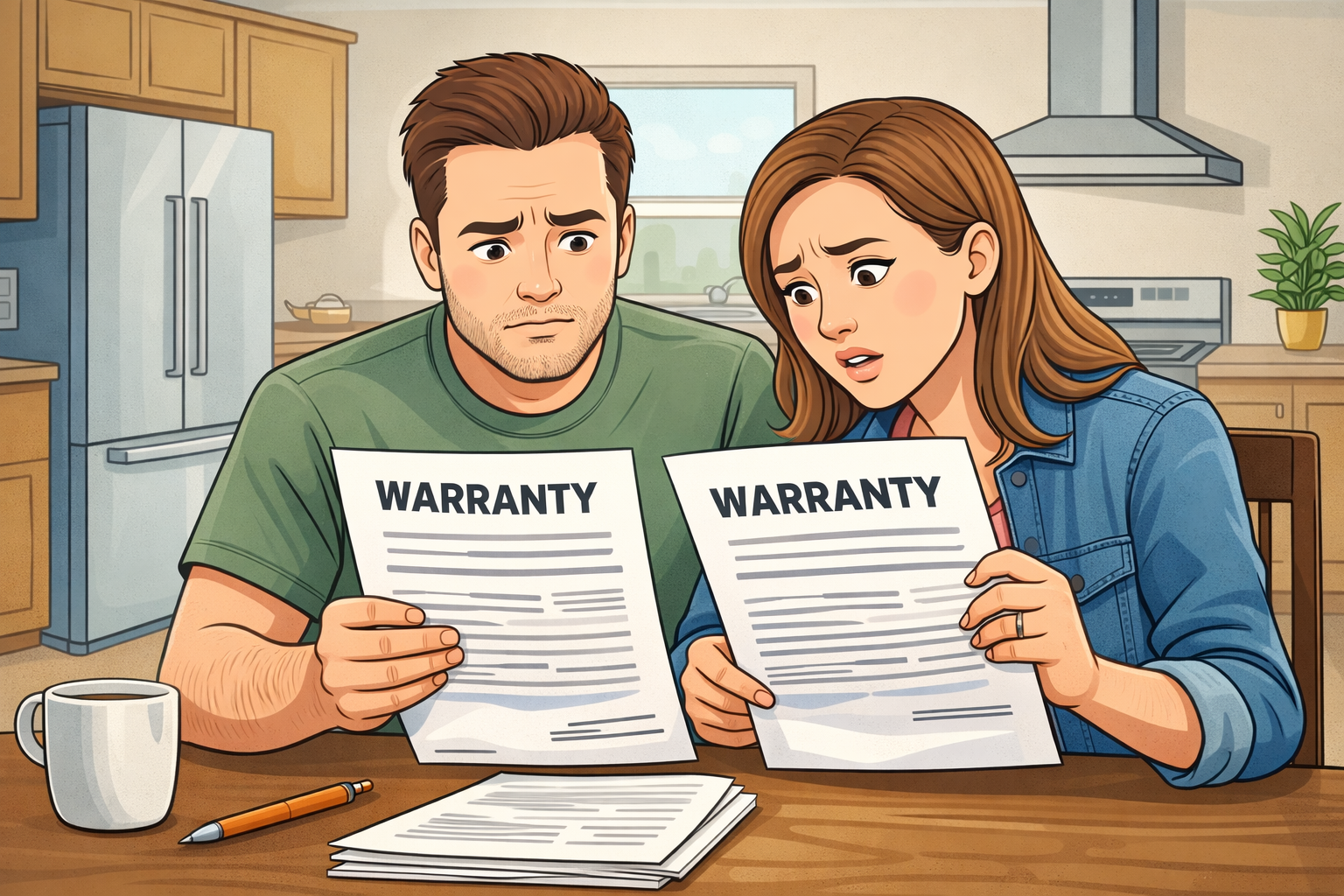
The two warranties most homeowners are dealing with
Almost every residential roofing job involves two separate “buckets” of warranty coverage:
Manufacturer warranty (materials)
This covers manufacturing defects in the roofing products (shingles, certain accessories, sometimes other components depending on the system and the specific warranty document). Manufacturer warranties are controlled by the manufacturer’s written terms—period.
A common requirement across the industry is that products must be installed according to the manufacturer’s published installation instructions to remain eligible for coverage. That includes details like fastener placement, starter course requirements, underlayment use, and other component-specific steps. The installation instructions are the rulebook, and they’re the first place manufacturers look when evaluating warranty issues. (Example: shingle installation instructions and warranty language vary by product line and manufacturer.)
Contractor workmanship warranty (installation)
This is the roofer’s warranty on the quality of the installation itself—things like flashing details, penetrations, and leak-related workmanship issues.
Workmanship warranties are not standardized. They vary by contractor and by contract. If you have one, the scope matters as much as the length.
What manufacturer warranties typically do and don’t cover
Because each manufacturer’s warranty is different, you should always treat your specific warranty document as the authority. But in general terms, manufacturers usually draw a line between:
Typically covered
Manufacturing defects in the roofing product (as defined in the warranty document)
Specific product performance issues that meet the warranty’s definition of a covered defect
Often excluded (or limited)
Damage from storms or external forces (wind events, hail impacts, debris, etc.)
Improper installation or installation not consistent with published instructions
Problems caused by building movement, deck issues, or structural conditions
Damage related to foot traffic or other trades
Unauthorized modifications after the roof is installed (new penetrations, mounts, etc.)
Certain moisture/heat-related impacts if they’re attributed to ventilation/attic conditions rather than a manufacturing defect
A key point for homeowners: a manufacturer can acknowledge that a product has warranty coverage in general, but still deny a specific claim if the failure is attributed to something excluded (installation method, ventilation conditions, storm damage, etc.).
Why Houston makes warranty details more important
Houston’s environment doesn’t change the warranty wording—but it does increase how often the “borderline issues” show up:
Heat + humidity can stress attic assemblies and expose ventilation or moisture-management problems faster.
Wind-driven rain during storms can exploit small flashing or sealing weaknesses.
Heavy downpours put drainage and roof transitions under real pressure.
That’s why the practical goal in Houston isn’t just “having a warranty.” It’s having a roof system that’s installed and maintained in a way that keeps it performing through our extreme weather conditions—and keeps your paperwork clean if you ever need to make a claim.
What a workmanship warranty should clearly state
If you’re reviewing a roofing contract (new roof or repair), you want the workmanship warranty to be concrete. Look for clarity on:
What’s covered (leaks due to workmanship, flashing issues, penetrations, etc.)
What’s excluded (storm events, customer-added penetrations, etc.)
Whether it covers repairs only, labor only, or labor + materials
Whether using another contractor later affects coverage
How warranty service is requested and documented
If the workmanship warranty is vague, it’s not necessarily “bad,” but it’s harder to rely on. Clear terms help both homeowner and contractor.
The biggest ways homeowners accidentally weaken warranty protection
These are the situations that frequently create disputes—because they blur responsibility and documentation.
1) Unknown product identity
If you don’t know the exact product installed (brand + line + color), it’s harder to reference the correct warranty terms and the correct installation instructions.
Fix: Save your contract, invoice, and product name/line in one place.
2) “Repairs” that don’t follow the manufacturer’s system
Random sealants, mismatched components, or patchwork details can create new issues and make it hard to determine what caused what.
Fix: Use repair methods consistent with the roof type and the manufacturer’s requirements for that roof assembly.
3) Third-party penetrations after installation
Satellite dishes, solar mounts, HVAC changes, new vents—these can introduce leaks and create finger-pointing.
Fix: Anytime a new penetration is needed, treat it as a roofing detail that should be properly flashed and documented.
4) Poor documentation
Even when the roof is fine, missing paperwork makes everything harder.
Fix: Build a simple “roof file.”
The “Roof File” Houston homeowners should keep
If you want maximum clarity later, save:
Contract/scope of work
Invoice/proof of payment
Photos of the roof before and after (and during, if available)
Product information (brand, line, warranty document name if provided)
Any maintenance or repair records
Any storm-event documentation that might be relevant (dates, photos)
This isn’t overkill. It’s how you prevent “he said/she said” later.
Ventilation: where homeowners get tripped up
Ventilation is one of the most commonly misunderstood parts of roofing, and it often gets mentioned in both performance discussions and warranty disputes.
Residential codes commonly set minimum attic ventilation requirements based on net free ventilating area (NFA), often expressed as a ratio (for example, 1/150 with an allowance for 1/300 under certain conditions).
Important: the right ventilation approach depends on the roof/attic design, intake vs exhaust balance, and the specific home. The goal here isn’t to “sell ventilation.” It’s to avoid preventable moisture and heat conditions that can shorten roof life and complicate claims.
Quick checklist: am I in a good warranty position?
◻︎I know the exact roofing product installed (brand + line)
◻︎The roof was installed following the manufacturer’s written instructions for that product
◻︎The contract clearly states what workmanship is covered and for how long
◻︎Any post-install modifications (penetrations, mounts) were properly flashed and documented
◻︎I have a roof file with contract + photos + product info
Questions to Ask Any Roofer About Warranties (So You’re Protected)
Use these questions with any roofing company (including us). They keep the conversation practical and focused on what actually affects coverage and long-term performance—without relying on “titles” or marketing labels.
What exact roofing products will you install?
Ask for the brand + product line (and color, if applicable), plus the underlayment, starter, ridge cap, and ventilation components being used. The warranty and installation requirements depend on the exact product system.Will you install it according to the manufacturer’s written installation instructions for that specific product?
This matters because manufacturer warranties and performance expectations are tied to the published instructions (fastening pattern, starter strips, accessories, etc.).What workmanship warranty do you provide, in writing—and what does it cover?
Have them point to the actual language in the contract. Specifically ask whether workmanship coverage includes:leak repairs attributed to workmanship
flashing details
penetrations (pipe boots, vents, skylights, etc.)
Also ask what’s excluded and how warranty service is handled.
How will you document the job?
Ask if you’ll receive:photos before/during/after (especially around flashings and penetrations)
a clear scope of work
the product names used
Good documentation prevents disputes later.
If another trade adds a penetration later (solar, satellite, HVAC), what’s the right way to handle it?
You want a clear answer that new penetrations should be properly flashed and documented—not “just caulk it.”What maintenance do you recommend to keep the roof performing in Houston’s climate?
A trustworthy answer will include basics like keeping drainage paths clear, watching penetrations/flashings, and checking the attic for moisture signals—without making unrealistic promises.If storm damage happens, what should I do first?
You want a step-by-step process: document with photos, avoid unqualified “patch” work, and get a condition assessment so decisions are based on facts.
Next step (simple + homeowner-friendly)
If you’re not sure what warranty applies to your roof—or you want a documented condition check—Community Roofing Texas can help you get clarity without pressure.
Request a free online roof estimate: https://communityroofingtexas.com/free-estimate
Or start with roofing services / inspection options: https://communityroofingtexas.com/roofing-services