
Top 5 Roof Maintenance Tips for Houston Homes (That Actually Move the Needle)
Roof maintenance isn’t glamorous—but in Houston it’s one of the highest-ROI things a homeowner can do before storm season ramps up. Small issues at penetrations, flashings, and drainage points are the ones that usually turn into leaks when we get wind-driven rain and heavy downpours.
This post focuses on five maintenance actions that actually matter for Greater Houston roofs, plus a simple timing plan you can follow.
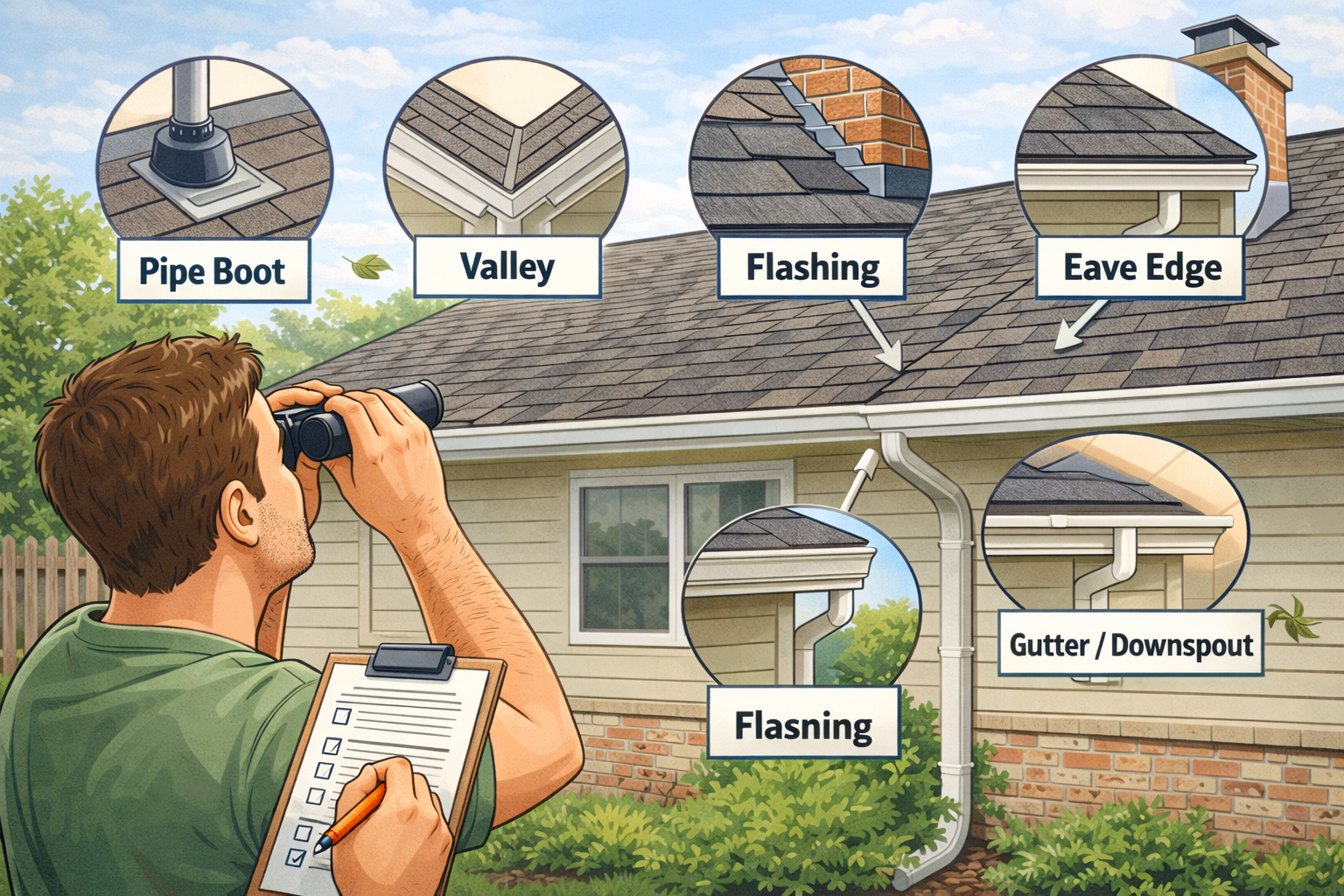
Tip 1: Treat roof penetrations like “maintenance hotspots”
Penetrations are where roofs most commonly leak because they combine water flow paths, movement, and material transitions in one place. Common penetrations include pipe boots, vents, flues, skylights, and anything mounted through the roof surface.
What you can do safely:
From the ground, use binoculars to look for cracked rubber boots, lifted edges, or visibly exposed fasteners around penetrations.
After heavy rain, check the interior for subtle signs that match the penetration locations (faint staining, a soft spot, or a musty smell).
Why it moves the needle:
If a penetration detail fails, water can travel along decking or framing before it shows up on a ceiling. Catching it early often reduces the scope of repair.
Tip 2: Keep valleys and drainage paths clear (Houston downpours don’t “ease in”)
Valleys, roof-to-wall areas, and the uphill sides of chimneys are collection points for leaves, twigs, and shingle granules. In a hard Houston rain, debris can trap water long enough to push it sideways into places it doesn’t belong.
What you can do safely:
Clear visible debris from valleys and roof edge areas you can reach safely from a ladder. If you can’t reach it safely, don’t improvise—schedule a professional cleaning/inspection.
After big winds, do a quick walk-around and look for branches or leaf piles sitting in valleys.
Why it moves the needle:
Keeping water moving off the roof is one of the simplest ways to reduce intrusion risk—especially when rain is heavy and wind-driven.
Tip 3: Gutters are part of the roof system (treat overflow as a roof problem)
In Houston, gutters don’t just “look nice.” They manage roof runoff. When gutters overflow or back up, water can soak fascia, wet soffit areas, and hit roof edges repeatedly—creating conditions for wood damage and edge leaks.
What you can do safely:
Clean gutters and confirm downspouts are not clogged.
During a strong rain, look for these red flags:
water pouring over the front edge
water slipping behind the gutter
standing water that doesn’t drain
Why it moves the needle:
Drainage problems can cause damage that looks like “roof failure” but started as a maintenance issue.
Tip 4: Use your attic as an early-warning system (if you can access it safely)
Your attic often shows problems before your ceilings do. You’re looking for evidence of moisture—either from a roof leak or from condensation issues.
What to look for:
dark stains on decking (especially near valleys, penetrations, or walls)
damp or matted insulation
rusty nail tips or fasteners
a musty smell that wasn’t there before
Important note (Houston reality):
Moisture in an attic isn’t always a roof leak. It can also be condensation related to ventilation and air leakage between the home and the attic. If you see moisture, the goal is to diagnose it correctly—not guess.
Tip 5: If wind is part of your risk, focus on edges and details—not just “the shingles”
Houston storm season is as much about wind-driven rain as it is about rainfall volume. Even a roof that looks “fine” can be vulnerable at edges, transitions, and details that wind can exploit.
What you can do safely:
From the ground, look for:
lifted shingle edges (especially along rakes and eaves)
distorted ridge caps
missing or loose edge metal
flashing areas that look separated or “shadowed” (a sign something has lifted)
Why it moves the needle:
Many storm leaks don’t come from a dramatic hole. They come from small separations that wind-driven rain can push through.
A simple Houston roof maintenance schedule
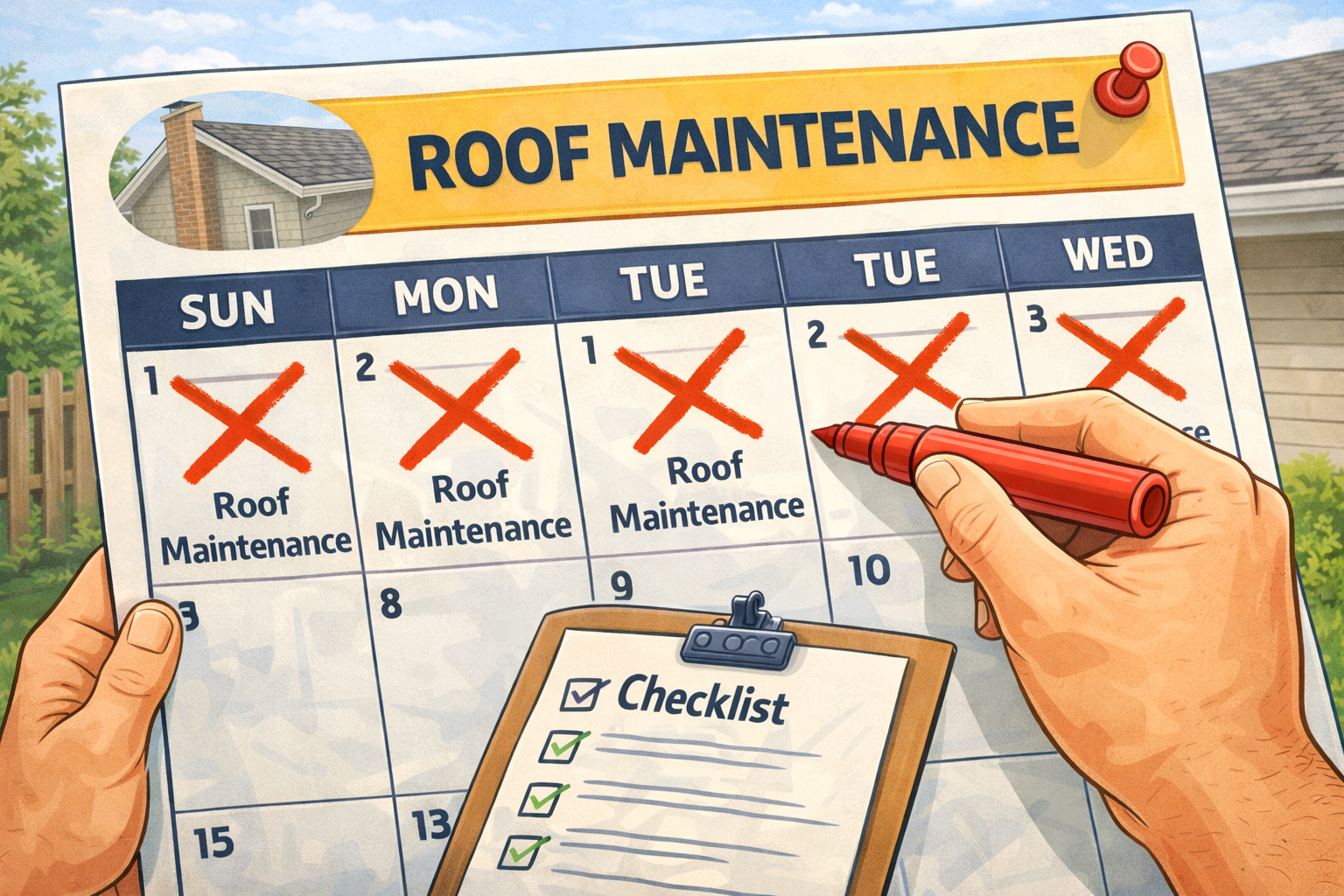
Here’s a practical rhythm that works well for Greater Houston homes:
Late winter / early spring (right now):
clean gutters and downspouts
do a ground-level visual inspection for lifted shingles and penetration issues
check attic for staining (if accessible)
Late spring (before hurricane season ramps up):
clear valleys and roof transition debris
re-check penetrations and flashing areas
schedule a professional inspection if anything looks suspicious
After major storms:
document what you can see safely from the ground
check attic for new staining or damp insulation
get a professional condition assessment so decisions are based on facts
Want a low-friction next step?
If you want an easy starting point for budgeting and planning, request a free online roof estimate here:
https://communityroofingtexas.com/free-estimate
If you want an inspection or want a professional to evaluate what you’re seeing, start here:
https://communityroofingtexas.com/roofing-services