
Shingle Wind Resistance: What Ratings Mean in Real Houston Storms
When Houston homeowners hear that a shingle is “rated for 110 mph” or “rated for 130 mph,” it sounds simple.
It is not.
A shingle wind rating is not a promise that your roof will come through every storm untouched. It is not the same thing as a hurricane-proof roof. And it does not mean every roof installed with that shingle will perform the same way.
Wind resistance depends on the shingle, the installation, the nail placement, the starter strips, the roof shape, the age of the roof, the condition of the decking, and whether the shingles have properly sealed down.
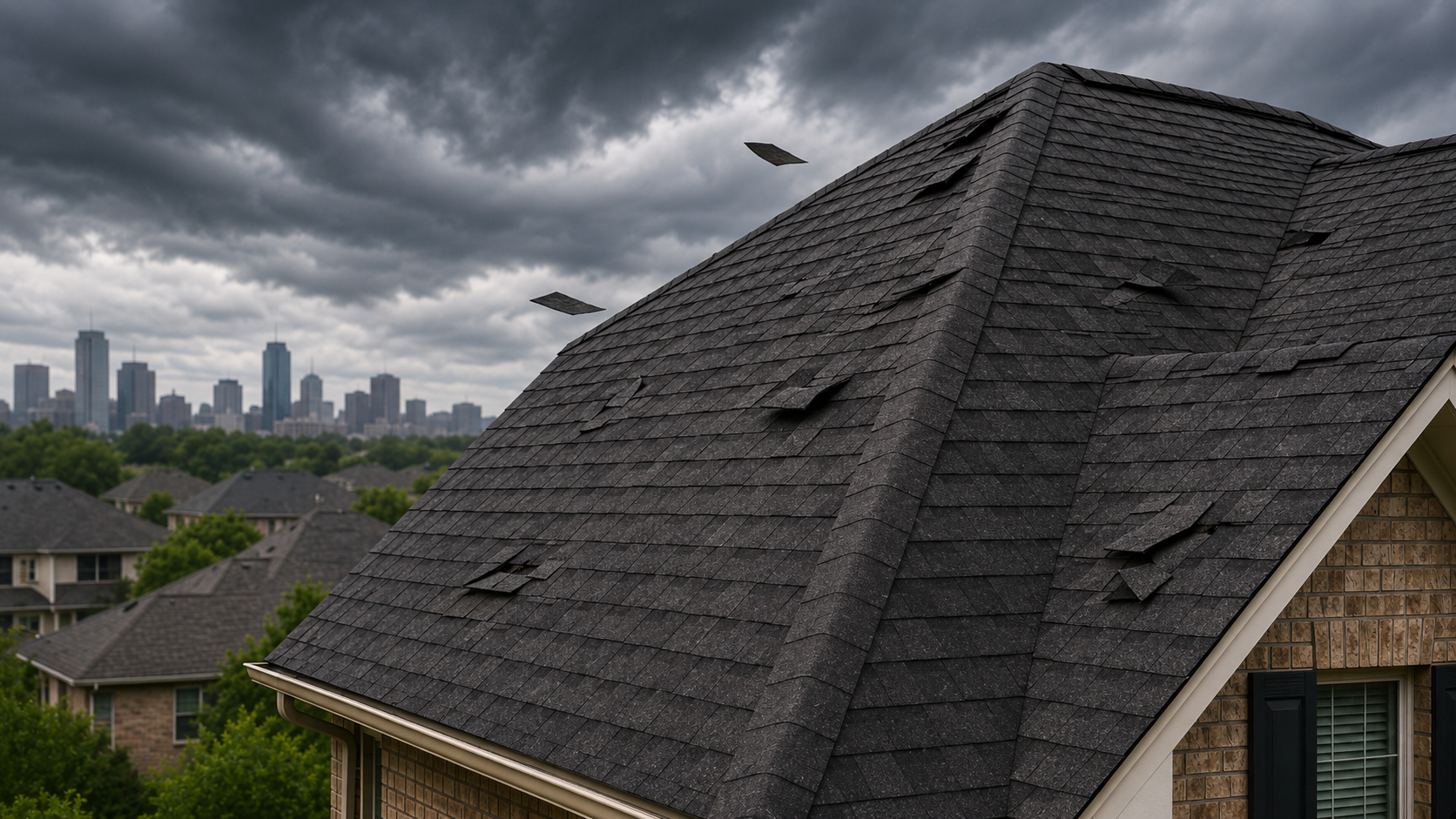
That matters in Houston because we deal with spring thunderstorms, wind-driven rain, hail-producing storms, tropical systems, and hurricane-season weather. Strong wind does not just “blow across” a roof evenly. It creates uplift pressure, especially at roof edges, corners, rakes, ridges, and other vulnerable areas.
This article explains what shingle wind ratings actually mean, what homeowners should look for, and why installation matters just as much as the product printed on the package.
What Is a Shingle Wind Rating?
A shingle wind rating is a way of describing how a shingle performed under controlled testing and warranty conditions.
It does not directly predict exactly how that roof will perform in every real storm. Actual wind exposure depends on roof height, roof shape, installation quality, shingle sealing, storm duration, turbulence, surrounding conditions, and the overall condition of the roof system.
For homeowners, the most common numbers you may see are 60 mph, 110 mph, 130 mph, or in certain manufacturer-specific systems, a limited wind warranty with no stated maximum wind speed limitation when qualifying shingles and required accessory products are installed according to that manufacturer’s warranty terms.
The important part is this:
A wind rating or wind warranty is not just about the shingle sitting on a shelf. It is about how that shingle performs when installed correctly.
That usually means:
• Correct nail type
• Correct nail placement
• Correct number of nails
• Proper starter shingles at the eaves and rakes
• Proper hip and ridge shingles
• A clean roof deck
• Adequate sealing of the factory adhesive strip
• Installation consistent with the manufacturer’s instructions
If those details are wrong, the roof may not perform the way the manufacturer’s published rating or warranty terms describe.
The Two Big Wind Standards: ASTM D3161 and ASTM D7158
Homeowners do not need to memorize roofing test standards, but it helps to understand that shingle wind ratings come from controlled testing methods.
Two common standards are ASTM D3161 and ASTM D7158.
ASTM D3161 is a fan-induced wind test used for steep-slope roofing products, including asphalt shingles. In simple terms, shingles are installed on a test deck and exposed to controlled wind conditions to evaluate how they resist lifting, tab movement, or damage.
ASTM D7158 focuses more on uplift resistance. It evaluates the sealed shingle’s ability to resist the forces that try to lift it away from the shingle below.
That is a key point: wind damage is often about uplift.
Wind can get under edges, corners, lifted tabs, poorly sealed shingles, or vulnerable roof areas and begin working the material loose. Once one shingle lifts or tears away, surrounding shingles may become more vulnerable.
Another confusing point is that ASTM classifications and manufacturer wind warranties are not always written the same way. A shingle may be tested under ASTM D3161 or ASTM D7158, while the manufacturer warranty may describe coverage using a different wind speed number, depending on the product and installation method.
That is why the current manufacturer installation instructions and warranty documents matter for the exact shingle being installed.
Why the Warranty Number Is Not the Whole Story
Many homeowners focus on the wind speed number.
That is understandable. A 130 mph wind warranty sounds stronger than a 110 mph wind warranty. But the number by itself does not tell the whole story.
Manufacturer wind warranties usually apply only under specific conditions. Those conditions may include the required nail count, nail placement, starter strip installation, hip and ridge products, accessory products, and whether the shingles had the opportunity to seal down.
In other words, the warranty is tied to the roof system and installation, not just the bundle label.
A roof can have a good shingle product and still have weak wind performance if the installation details are poor.
The opposite is also true: a properly installed architectural shingle roof with the right fastening pattern, starter strips, sealed shingles, and sound decking can perform much better than a roof where corners were cut.
What “High-Wind Application” Usually Means
A high-wind application generally means the shingles are installed with enhanced fastening and system details required by the manufacturer.
That may include more nails per shingle, starter shingles installed at the eaves and rakes, required accessory products, or other manufacturer-specific installation steps.
For example, many standard shingle installations use four nails per shingle. High-wind applications often require enhanced fastening, such as six nails per shingle, but the exact requirement depends on the manufacturer, product, warranty, and current installation instructions.
Nail count alone is not enough.
The nails must also be placed in the correct nailing zone. If the nails are too high, too low, angled, overdriven, underdriven, or missing the proper common bond area, the shingle may not be secured the way the manufacturer intended.
That is why the phrase “six nails per shingle” does not automatically mean the roof was installed correctly. The placement matters.
Why Starter Shingles Matter in Wind
Starter shingles are one of the details homeowners rarely ask about, but they are important for wind resistance.
Starter shingles are installed along the eaves and often along the rake edges of the roof. They help secure the first course of shingles and provide an adhesive seal at vulnerable edges.
In Houston storms, roof edges matter.
Wind pressure is often stronger at edges and corners than it is across the middle of the roof plane. If the rake edge or eave edge is not properly started, sealed, and fastened, wind can begin lifting shingles from the perimeter.
Once wind gets under the edge, damage can spread.
That is why a roof estimate should not just say “architectural shingles.” It should specify the roof system details: starter shingles, underlayment, ridge caps, ventilation, flashing, and the fastening pattern.
The Seal Strip Is a Big Deal
Most asphalt shingles have a factory-applied adhesive strip. After installation, heat and sunlight help activate that adhesive so the shingles bond together.
Once sealed, shingles are much more resistant to wind uplift.
But newly installed shingles may not be fully sealed immediately. Shingles installed during cooler weather, installed on shaded roof slopes, or exposed to dust and debris may take longer to seal.
Houston heat usually helps shingles seal, but shade, debris, timing, roof orientation, and weather conditions can still matter.
This is one reason a newly repaired or newly replaced roof can be more vulnerable before the shingles have had time to seal properly.
Wind Resistance Is Not the Same as Hail Resistance
Wind resistance and impact resistance are different.
A shingle may have a strong wind warranty but not be impact-resistant. Another shingle may be marketed for impact resistance but still require proper installation to achieve its wind warranty.
Hail damage usually involves bruising, mat fracture, granule displacement, or impact marks. Wind damage usually involves lifted, creased, torn, displaced, or missing shingles.
A storm can include both hail and wind, but the damage mechanisms are different.
That matters for inspections, insurance documentation, and repair decisions.
What Wind Damage Looks Like on a Houston Roof
Wind damage is not always as obvious as a missing section of roof.
Sometimes the first sign is a lifted shingle tab, a crease, or a small area where the seal broke loose. From the ground, those signs may be hard to see.
Common signs of wind-related roof damage include:
• Missing shingles
• Shingles lifted at the bottom edge
• Creased shingles
• Torn shingles near rakes, ridges, hips, or valleys
• Exposed nails or fasteners
• Shingle pieces in the yard
• New roof leak after wind-driven rain
• Edges that look wavy, uneven, or disturbed
• Interior staining after a storm
A missing shingle is obvious. A lifted or creased shingle is more subtle.
That subtle damage still matters because once a shingle has been lifted, creased, or unsealed, it may no longer shed water the way it should.
Why Houston Storms Are Hard on Shingle Roofs
Houston roofs deal with more than one type of weather stress.
We have heat, humidity, UV exposure, heavy rain, wind-driven rain, hail, tropical storms, and sudden severe thunderstorms.
Heat and UV exposure age asphalt shingles over time. As shingles age, they can lose flexibility. Older shingles may be more brittle and less forgiving when wind tries to lift them.
Humidity and heavy rain expose weak flashing, roof edges, pipe penetrations, valleys, and other vulnerable details.
Wind-driven rain can push water into areas where normal vertical rainfall may not. That is why some roofs only leak during storms with strong wind, even if they seem fine during ordinary rain.
By the time a homeowner notices a ceiling stain, the roof may have already been through several weather events that weakened the system.
The Roof System Matters More Than the Shingle Alone
A shingle is only one part of a roof.
Wind performance depends on the full assembly.
That includes:
• Roof decking
• Underlayment
• Starter shingles
• Field shingles
• Hip and ridge shingles
• Flashing details
• Pipe jacks and roof penetrations
• Nail pattern
• Edge metal and drip edge
• Installation workmanship
Some warranty systems also require specific accessory products, which may include roof deck protection, starter strips, ridge caps, leak barrier, or attic ventilation. Those requirements are about system eligibility and warranty terms, not just the shingle itself.
If the decking is soft, deteriorated, or poorly fastened, the nails may not hold correctly.
If the starter course is missing or poorly installed, the roof edge may be vulnerable.
If the nails are overdriven, they can cut through the shingle mat.
If the shingles are not sealed, wind can get underneath them.
If ridge caps are not installed correctly, wind can damage one of the highest and most exposed parts of the roof.
That is why a “wind-rated shingle” does not automatically mean a wind-resistant roof.
Questions to Ask Before a Roof Replacement in Houston
If you are replacing your roof in Houston, especially before hurricane season, ask specific questions.
Good questions include:
• What shingle are you installing?
• What is the manufacturer’s wind rating or wind warranty?
• Is this being installed as a standard application or high-wind application?
• How many nails per shingle will be used?
• Will starter shingles be installed at the eaves and rakes?
• What hip and ridge shingles will be used?
• How will damaged decking be handled?
• Will the roof be installed according to manufacturer instructions?
• Will the estimate list the actual materials being used?
A vague estimate that only says “30-year architectural shingles” does not tell you enough.
A better estimate should clearly describe the system being installed.
Does a Higher Wind Rating Always Mean You Need That Shingle?
Not always.
A homeowner does not need to buy the most expensive shingle just because it has a bigger wind number or stronger marketing language.
The right choice depends on the home, roof design, budget, exposure, tree coverage, neighborhood, slope, insurance considerations, and how long you plan to stay in the house.
But in Houston, wind resistance should not be ignored.
A roof replacement is a good time to make sure the installation is appropriate for local storm conditions. In many cases, the difference between a weaker installation and a stronger one is not just the shingle brand. It is the details.
Wind Ratings and Insurance Claims
A shingle wind rating does not automatically determine whether insurance will approve or deny a storm claim.
Insurance coverage depends on the policy, the type of damage, the date of loss, the condition of the roof, and the adjuster’s findings.
A manufacturer warranty and a homeowners insurance policy are not the same thing.
The manufacturer warranty may address certain product-related or wind blow-off conditions under specific requirements. Insurance may address sudden storm damage, depending on the policy.
That is why proper documentation matters after a storm.
Photos, inspection notes, storm date information, and clear damage documentation can help homeowners understand what happened and what options they have.
What Homeowners Can Safely Check From the Ground
After a strong wind event, do not climb on the roof to inspect it yourself.
From the ground, you can look for:
• Shingles in the yard
• Visible missing shingles
• Raised or uneven roof edges
• Damage near ridges or rakes
• Loose pieces around gutters or downspouts
• New ceiling stains inside
• Water spots in the attic
• Dripping around pipe penetrations or vents
• Debris impact from branches
Binoculars or zoomed-in phone photos can help, but some wind damage is hard to confirm from the ground.
If you suspect wind damage, a roof inspection is usually the safer and more accurate next step.
Bottom Line: Wind Ratings Matter, But Installation Matters More
Shingle wind ratings are useful, but they are not magic.
A 130 mph-rated shingle installed incorrectly may not perform as intended. A roof with missing starter shingles, poor nail placement, unsealed shingles, weak decking, or sloppy edge details can be vulnerable even if the product itself is good.
For Houston homeowners, the real question is not just, “What is the shingle rated for?”
The better question is:
“Was the roof system installed correctly for Houston storm conditions?”
That includes the shingle, the fastening pattern, the starter course, the ridge caps, the roof deck, the flashing, and the inspection process.
Community Roofing Texas helps Houston homeowners inspect, repair, and replace asphalt shingle roofs with storm performance in mind. Whether you are dealing with recent wind damage, planning a roof replacement, or trying to understand what your current roof can handle before hurricane season, the right inspection can help you make a more informed decision.